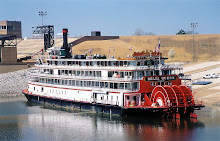
Showing posts with label Brownsville. Show all posts

September 22, 2009

On Coke Ovens and The Fayette County Exodus


Coke ovens at Poland Mines 2009 courtesy Of SWPA Rural Exploration

In the Ten Mile Creek area, Marianna, the Champion Mine at Besco, Dilworth at Rices Landing and Poland Mines # 2 all had coke ovens operating at one time or another. At most mines, a coking operation was set up as an adjunct to the mine, most mines producing more coal than they could process to coke. At Besco, with 257 ovens, the entire output was made to coke and shipped out that way. All coke ovens on this side of the river were of the beehive type as were the majority in western Pennsylvania. The later rectangular ovens were invented by W.J. Rainey engineers starting around 1905 and were adopted at a dozen larger works in the Connellsville and Klondike regions. This type was more mechanized and required higher labor skills. The final answer was using by-product ovens that captured all the gasses for use and brought the coking process to it's ultimate efficiency. This kind of operation was done best, not on site, but in large, dedicated works like the Clairton Coke Works, opened in 1918 and still the largest in the world. In the 1970's and 80's, the company I worked for, Ohio Barge Line, had at least 5 big boats moving coal from Kentucky to feed the ovens at Clairton, each boat bringing over 22,000 tons a week. There were dozens of other boats, all towing coal to there from out of the Mon, Allegheny and Ohio river mines.
By-product ovens outpaced beehive ovens by 1919 and eventually replaced the beehive ovens in the region by 1925, although some continued to operate as late as 1960.

Many older folks remember the way the nighttime sky would be lit up from the rows of ovens. I remember, as a child, seeing the glowing ovens of Alicia reflected on the river above Brownsville as we drove up the river road.


In the early decades of the last century as the new mines opened in Washington and Greene counties there was what I choose to call an exodus of sorts from the Fayette county mines. Many folks in the Ten Mile area can trace family roots back to Fayette county patch towns. Modern patch towns with indoor plumbing, electric lights, porches, general improvements to roads and grounds must have been part of the attraction as well as the idea of starting out a new life in a new place. Mather , Crucible, Richeyville and Marianna with their movie houses, ice cream parlors, ball fields and playgrounds, all built by the company, looked pretty good to these, many of them first generation Americans, coming from the old worn out patch towns to the east. Marianna's and Clarksville's ( Williamstown ) brick homes even had basements, unheard of in most older patches. Also, some of the older mines were being played out after many years of mining. Modern technology was already beginning to displace workers, more mechanized mining and coking meant the loss of many jobs. A lot of young men, miners already themselves, took the opportunity to strike out from the old family home to start a new life on their own in a new patch.


Map Courtesy Of coalcampusa.com

My Grandfather worked in Fayette for several years at East Millsboro for Hustead-Semens and moved to Clarksville in 1924 to finish his mining career in Clyde. All three of his sons became miners, two of them for their entire lives, my father in Clarksville and my Uncle George in Richeyville. My maternal grandfather worked in a lot of different mines. Arriving from the Tatra Mountains region of Poland in 1913, he, Thomas Krencik, went to work in a Fayette county mine and the next year sent money for boat passage for his wife and daughter. He and his wife Anna had 15 more children, four of which died in infancy. Of these, seven were born in Fayette county towns like Republic, Edenburg, Lambert and Helen. Around 1924 he moved his large family to Marianna, first to a farm and later to the patch. He wasn't finished roaming, by 1937 they were living in Ontario, near Cokeburg, from which mine he retired. By that time , several of his sons who took up mining had moved to Clarksville, Ellsworth, Marianna, Cokeburg and other area towns. Many of the older people that I have interviewed have direct ties to Fayette. Years of reading obituaries have shown me that if you come from this area and your roots go back to a couple generations of miners, odds are good that at least one side of your family came from the county to the east. In this way the already decades old commercial coal and coke industry in Fayette county significantly impacted on the later growth of the Ten Mile Creek area.

The 1850 US Census of Manufactures, the earliest Census reference to coke, listed Allegheny County as the only coke producer in the United States. By the 1860 Census, four counties in the United States that produced coke were listed. It should be noted that the Clinton furnace on Pittsburgh's Southside began using coke as its only fuel in 1859. By 1870 there were estimated to be 1,300 coke ovens in the United States. All of them were beehive ovens and all were in Western Pennsylvania, 1,063 in the Connellsville region alone. Of the 2,752,475 tons of coke produced in the US in 1880, Fayette Co. produced more than 45%. Westmoreland followed with 27%, and Allegheny contributed 3.5%. Combined, the three counties yielded almost 77% of the nation's total. In 1880 seventy-two percent of the nation's beehive ovens were within the same three counties. Connellsville coke was the unequaled fuel of preference for the iron and steel industry by 1890. The peak of Connellsville coke production was in 1916, when there were more than 40,000 active ovens.
Connellsville Coke Region Maps from National Park Service


August 26, 2009

A Look At the Upper Monongahela by Richard Bissell


Brownsville Pa. Looking south

A description of the towns and sights along the Monongahela River from Brownsville to Fairmont in the late 1940s, written by the pilot of the towboat COAL QUEEN:

You would never think, to walk the streets of Brownsville today, that the town is old and filled with history and legend. Monongahela Valley towns just do not look the part as do Lexington and Concord and Portsmouth and Gloucester and Boston and Philadelphia. For famous Redstone Old Fort, now Brownsville, is another "industrial town," and aside from the Greek Revival, postColonial Playford House on Second and Market Streets, little romance is visible.
Colonel James Burd selected the site of Redstone Old Fort in 1758 because of the presence there of an early Indian fortification, and built his stockade. In 1785 Thomas and Basil Brown founded the town, which in the years to follow played an important part in the westward movement. It was at Brownsville that the weary emigrants saw the end of their toilsome struggle over the mountains and took to the calm waters of the Monongahela for the next lap of their journey. As the steamboat rose to fame and fortune on the western waters and industrial activity in the valley grew, the Brownsville-Pittsburgh trade developed. Even before the slack-water system had been completed to Brownsville in 1844, there were about two hundred steamboat arrivals annually at Pittsburgh from upriver points. After the locks and dams went into service, there was a daily packet line between Pittsburgh and Brownsville.
There is an old iron bridge in Brownsville that I inspected one time when we were laid up in drydock out at the Hillman shipyard. This bridge is on Market Street near Bank, and it has a tablet on it which says it is the first iron bridge west of the Alleghenies. It was apparently built in the period 1836-1839 of iron forged in Iocal furnaces. Before this bridge was built, Henry Clay's carriage overturned near this spot, dumping the great man into Dunlap's Creek. They say that Clay "gathered himself up with the remark that Clay and mud should not be mixed in that place again." Clay then returned to Washington to his senator's post and shortly afterwards an order was issued for the construction in Brownsville of an "iron span, carrying the road high above the stream."

Maxwell Lock looking south

After we go under the Brownsville Highway Bridge, height 50.2 feet above low water, span 386 feet, we come to Dam 5, and after locking through, we pass the Alicia Marine Ways of the Hillman Company and then are pretty much out in the country, except for coal mines and tipples at regular intervals. There's Vesta tipple and Frick Mine Light, Fox Mine Light and the H. C. F. Coke Company tipple, Vestaburg and Fredericktown and the bend around to Tenmile Creek, and Emerald Tipple, Pumpkin Run, Klein's Sawmill Light, Crucible Fuel Company tipple, and Light, Weirton Steel Company tipple, National Steel Corporation Pier, Buckeye Coal Company tipple, Browns Run, Little Whiteley Creek, Robena Mine Light and tipple, Pittsburgh Steel tipple, Duquesne Light Company tipple, Jacobs Creek, and then around the bend to Dam 7.


Vesta 5 Tipple looking south

Below Dam 7 are Greensboro on the starboard side, and New Geneva on port. New Geneva boasts a population of 410 souls, more or less, and was named for the native city of its famous early settler, Albert Gallatin. Gallatin came to this country without friends or influence, and by the sheer power of his personality and ability (and despite the handicap of a monumental French accent) achieved appointment as a member of the President's Cabinet within ten years of his arrival. A man of many talents, Gallatin served in the Revolutionary War, then became a French instructor at Harvard. Later he journeyed to Richmond on business and there became an intimate of Governor Patrick Henry, who advised him to go west to the wild lands of opportunity out by the Monongahela. Gallatin settled in Fayette County, a few miles from New Geneva and in a short time established the first glassworks west of the Alleghenies. In 1789 he built Friendship Hill, a 2 1/2-story, ivy-covered residence, still standing and open to the public.He began to enter local politics, filling several state and federal posts, and in 1801 was appointed secretary of the treasury by President Jefferson. He served in this post during both of Jefferson's presidential terms, the.whole of President Madison's first term, and until February, 1814, in the second, something of a record in Cabinet tenure. After retirement from the Cabinet this energetic adopted son of the new Republic held several diplomatic posts and finally, between 1831 and 1839 was president of the National Bank of New York.
Patrick Henry said Albert Gallatin was one of the most extraordinary men he had ever seen. He was surely of keen intellectual powers and magnificent ability in political and diplomatic affairs--the model statesman. At Friendship Hill the dignified retirement of Gallatin was embellished in 1825 by a visit from "his long tried, his bosom friend," the Marquis de Lafayeffe. Of this sumptuous affair an old Monongahelite, James Veech (writing in 1858), said: "Who that was there can ever forget the 'feast of reason'--and other good things, and the 'flow of soul'-and champagne? The like of which old Springhill [Township] had never seen--may never see again."

In the five miles upriver from New Geneva to Point Marion, where the Cheat River enters the Monongahela, no less than five coal tipples are busy dumping Pennsylvania coal into waiting barges. Point Marion has a large glassworks and a sand and gravel company which owns a baby Diesel towboat with a steam boiler for operating the steering rig and blowing the whistle, a quaint arrangement unique in my experience.


Morgantown looking east around 1928

Around a few bends and beyond more tipples, Morgantown rises on the hills to port. Ah, Morgantown, with your glass factories and coal mines and spaghtetti at Capellanti's and houses all peeling from chemical fumes in the air! On Saturday nights in spring the boys and girls from the University of West Virginia, perched up on the hill at the end of Main Street, mingle on the sidewalks down by the courthouse with coal miners and fanners and glassworkers. To us on the Coal Queen, Morgantown was everything, our metropolis--the hot bath, the glass of Tube City beer, the lump-in-throat in the movies, the Girl, paradise, purgatory--we knew them all in Morgantown. But Morgantown knew little of us. Steamboaters, with their excitable and noisy ways, are not invited to tea parties. I can call every bartender and short-order waitress in town by name but the mayor and I have yet to shake hands. Above Morgantown the Monongahela is a beautiful narrow stream running between high hills--"mountains," we always called them. The locks are small, the traffic is light, and there is a friendly intimacy benveen boat crews and lock tenders. The locks are so close that in a six-hour watch you might make seven or eight locks. After a few months of this, running those locks seemed automatic. That's pretty country up in there from Morgantown to National Mine, and pretty again above Jordan, especially in the spring, when the trees and flowers are all in bloom. And then, half blinded sometimes by the smoke from the railroad yard, we come to Fairmont, and beyond it the "Dark Bridge" (no lights on it), which we all hated, and then there was the point, where the Monongahela ended, a point with a big tree on it, a good mark and easy to pick up with the searchlight on a bad night.

The Monongahela is formed by the West Fork River and the Tygart River, which join here at Fairmont, 128.73 miles south of Pittsburgh. The tipple where we loaded coal was at Kingmont, up the Tygart, two miles above head of navigation on the Monongahela, and we would snake our loads out of there in a river so narrow you could nearly jump across.


Now just imagine, in the old days you could take a good big steamboat from Fairmont, West Virginia, at the headwaters of the Monongahela, down to Cairo, up the Mississippi and Missouri to Fort Benton, Mont.--3,623 miles, or about as far as from the North River in New York to the East India Docks on the Thames at London. In fact the stern-wheeler E. H. Durfee made regular trips between Pittsburgh and Fort Benton in the years 1872 to 1876. Wouldn't that be something, to raise steam amidst the roar of industry on the Monongahela and keep that paddle wheel splashing until you began to run into buffalo and Sioux and the Rocky Mountains ?

This is taken from the book The Monongahela by Richard Bissell, part of the Rivers of America series, Rinehart & Co., Inc., New York, 1952, pp. 70-83. He wrote several outstanding books on towboating and the river life. The accounts are gritty and very realistic. He also wrote several successful Broadway plays including The Pajama Game.

January 24, 2009

Ten Mile Trivia # 1


There are two wonderfully droll insults in this. It was placed in an early Washington County newspaper on December 1, 1795 : Whereas a certain RALPH SMITH, of Morgan Township in this County (Greene Co. after 1796), some years ago called me a convict in a public company, and later spoke the same language in ambiguous terms, (such as his good breeding afforded). I do hereby request the favor of Mr. Smith, to wash and shave and go and inquire of Mr. James GILASPY, on the headwaters of Buffalo Creek, and Robert CARREL on the head waters of the Wheeling Creek, two gentlemen which sailed with me from the port of Londonderry, the 14th day of August in the year 1768, and landed at Newcastle, DE. the 3rd day of October following and acknowledge himself a malicious calumniator.
signed Myles Hay of Ten Mile Creek, Washington County.
He requests that he first " wash and shave " !

At Brownsville, for many years the head of steamboat navigation on the Monongahela river, passengers were transferred from the stage lines to the steamboats running between this point and Pittsburgh. West bound passengers were ticketed through from Cumberland, Baltimore and other points east, to Pittsburgh and other points west, via the National Road, and Monongahela river boats. It is shown by official figures that from 1844 to 1852 when the railroads came along, that more than three hundred thousand passengers left the stage lines at Brownsville and took passage on the Monongahela steamers down the river to Pittsburgh and Wheeling. Most of the emigrants and a large number of stage passengers, probably the majority, crossed the river at West Brownsville, and went over land across Washington County to Wheeling. The same was true of the journey from West to East. The National Road through Washington County was the short cut that saved much time over the longer river route past Pittsburgh. In 1852, Brownsville lost any advantages it had based on turnpike and river modes of transportation. In that year, the Pennsylvania Railroad was completed from Philadelphia to Pittsburgh and the Baltimore & Ohio Railroad was extended from Cumberland to Wheeling through Maryland and Virginia, effectively eliminating Brownsville as a major point of transit. The prominence of the National Road and of Brownsville came to an end as travel by stage, wagon and steamboat gave way to the railroad.

The first white settlers within the territory of Washington County were Everhart Hupp, George Bumgarner, and Abraham Teagarden and these first located their homes in the vicinity of the mouth of Ten-Mile Creek, all within the triangle made by Rice's Landing, Sandy Plains and Millsboro.

Charles L. Rowan was born in 1899, son of George E. and Althea (Prinkey) Rowan. In about May of 1936, he began employment as a laborer at the No. 5 mine of the Vesta Coal Company at Vestaburg, a job to which he commuted from his home. He was killed at the mine on Aug. 18, 1936, after only having worked there for three months. Said the Daily Courier : Rowan ... was decapitated and two other workers miraculously escaped a similar fate when a large slab of slate let go as they were leaving the Vestaburg workings after completing their day's work. The trio comprised a group of workmen who had left the man trip several minutes before the tragedy. Rowan was struck by the full force of the slate which landed on his head and severed it from his body, according to Deputy Edward Hagerty of Millsboro. The fatality was the first of the year at the Vesta Company mine.

Three young men held up the W.J. Rainey Coal Co. paymaster on a trolley car between Brownsville and Allison in Fayette County on the morning of March 11, 1922. They escaped with a satchel with about $30,000 in payroll cash. A guard with the paymaster was shot and seriously wounded as bandits and guards exchanged gunfire on the car, which had about 40 passengers.
That's a tremendous amount of money for 1922. Imagine 5 or more men exchanging gunfire on a trolley with 40 people on board.

Fairmont W. Va Newspaper dated Thursday, 9 February 1882:"Steamboating at Fairmont. The steamboat HARRY arrived here, this afternoon, at half-past four o'clock, having made the trip from Morgantown, about thirty miles, in less than seven hours.
They could have walked as quickly and I believe a horse walks faster than 4 miles an hour.

The Uniontown Morning Herald of June 7, 1926 reported that John A. Logan Strauch ... fell between two railroad cars while working on the Monongahela Division of the Pennsylvania Railroad at Clarksville. He had worked for the railroad for a number of years, at one time working out of the Rainey yards here, and was employed in the Brownsville section at the time of his death. The crew was shifting cars when the accident occurred.

Nick Massini discusses a ghost at Clyde Mine in Fredericktown, Pennsylvania. "The old Clyde mine was haunted by a fire boss that was killed years before. He was seen regularly seen making his run at the Ross Shaft area."
Richard Marcavitch recounted a ghost he saw at Vesta Five owned by the J and L Steel Company. He saw this ghost sitting in his dinner hole every day about the same time.

From 1906-1939 over 35,00 men died in coal mine accidents. In 1907 Pennsylvania lost 1614 with 5 disasters alone claiming more than 800 men.
Just one of the many reasons for the frightful accident rate is illustrated in this old photo showing a miner pouring black powder into a cardboard tube for inserting in a drilled hole to blast coal loose. On his cap is an open flame oil wick lamp. A sight like this would give a modern mine inspector an instant and fatal heart attack.


In the 30's Clyde miners developed a reputation as the first to go on strike. Then they got up early next morning to see that no one else worked.

Vesta 1 Allenport 1891 - 1924
Vesta 2 American Mine Lucy Station Elco 1892 - 1915
Vesta 3 Globe Mine Coal Center 1892 - 1918
Vesta 4 California, Daisytown, Richeyville 1903 - 1984
Vesta 5 Vestaburg 1907 -
Vesta 6 Denbo 1903 - 1947
Vesta 7 West Brownsville 1918 - 1923
Vesta 4 was the largest mine in the country. It eventually ran from the rail and river tipple at California Pa. to Pancake, just east of Washington Pa.

This old boatman did it all : Unknown newspaper dated Monday, 3 March 1884:
Interview With a Veteran River Man. Our reporter met Capt. I. N. Hook, the oldest river man on the Ohio, at the Swann House this morning. The Captain commenced steamboating in 1827. He was in this neighborhood at the time of the flood of 1832. He was the first who placed his barges in front of his steamboat when towing. Formerly it was customary to hitch them on behind, or tie them to the sides. His manner of towing was considered very amusing at its origin, but no one thinks of towing in any other way at the present time.
The Captain introduced the whistle now universally used at the present time. It was by accident that he discovered it. He was going into Wheeling and his whistle was broken. The upper hemisphere was blown off. He placed in its stead a keg. His whistle also caused much amusement but it has taken the place of the old 'bowl' screecher, which would almost lift a man off his feet when it blew.
The Captain also invented the 'spool windlass' by means of which the gates of the locks on all our rivers are now opened. They were formerly swung back by huge windlasses making hard work for eight men. Curious to say he took out no patents on the invention but gave the Company for which he worked all the advantages gratuitously.
He has been up the Little Kanawha repairing the locks damaged by the late flood. The Captain says he took the first steamboat to Burning Springs that ever passed up the Little Kanawha. He is now on his way to the Muskingum to repair the canal washed out in the flood.

I'll bet he invented the telegraph too, and the internal combustion engine , sliced bread , electricity, pop tarts and cheese in an aerosol can. I'll bet when the water got low he just put the boat on his back and waded upstream.

January 4, 2009

The Monongahela River Packet Co. And A Race On The River


This is the steam packet boat ELIZABETH at Fredericktown in 1902. She was 188 feet x 35 x 5.5 and was built at Brownsville ( the hull was built at Belle Vernon ) in 1888 for the Pittsburgh - Elizabeth Pa. trade. This trade died out by 1900, no doubt because the railroad by that time went as far upriver as Brownsville. It would be 7 more years till the rails reached any farther south on the west bank. This made the Ten Mile Creek Country trade above Brownsville worth pursuing. In 1902 an independent line was formed called the Monongahela River Packet Company and ran the ELIZABETH under that flag as far upriver as Morgantown. This put her in competition with boats of the Pittsburgh Brownsville and Geneva Packet Company , the oldest and biggest company on the upper river.
In August of 1902 she and the rival company's Str. I. C. WOODWARD met below old lock # 9 and raced each other to the chamber to be the first to lock through. They must have been pretty evenly matched because they arrived at the same time , both becoming wedged in the mouth of the lock and neither could or would move for the other. Here they sat for a while until the Masters of the vessels were called and the issue resolved .


The race resulted in a tie

Which won the race is unknown but in the end the smaller company lost out to the bigger in the trade. 1902 saw the end of the Monongahela River Packet company. She was laid up later that year and in 1903 was sold and moored in the Allegheny river above Pittsburgh's 6th street bridge. In 1904 the boat next to her , the OLIVETTE , caught fire setting the ELIZABETH ablaze. She was turned loose, drifted under the Union bridge , a covered wooden structure and set it on fire . She was then pushed to the bank "where she burned at leisure".

Fire was a big enemy of these large wooden structures, dried wood, countless coats of flammable paint ( anyone who has ever worked on any riverboat, of wood or steel, can tell you that the paint is applied at every opportunity ) , kerosene lamps ( until the 1890's ) , coal or coal oil stoves, strong winds often present on the river, all made it a real possibility. Most cities had large wharf front fires at different times that would destroy many boats at once. Other very real dangers were snags ( sunken trees poking into the hull, causing some boats to sink in less than a minute ) and other sunken obstructions, boiler explosions, groundings and Pilot errors. Most all were heavily insured so when for instance, the Str. NEW ERA was sunk then usually out came the NEW ERA # 2 in a few months. Even if a boat was lost due to fire, boiler explosion or sinking, the steam engine would always be salvaged. They seem to have been virtually indestructible and were often used in several different boats over many years. Some boats lasted 20 years and many just a few years. Packet boats ran year round and tended to wear out quicker than the bigger line haul towboats which ran somewhat seasonally.

Here's the ELIZABETH at Brownsville rounding to with her stacks knocked back to clear the wooden covered bridge there. On the left descending bank is the Str. EDGAR CHERRY, a packet that ran for several years between Pittsburgh and Morgantown until she hit the gates at old lock # 4 and sunk in 1904. One can see the front end of a packet boat on the Brownsville (left) side, this is the OLIVETTE, the boat that would two years later cause the fiery destruction of the Elizabeth in Pittsburgh ( see above ) .


Here she is in the 1890's, possibly at McKeesport, Pa. It must have been some kind of holiday.


Another boat running in this trade for the Mon River Packet Company was the Str. GERTRUDE. She was fancier than most Mon River packets, with a huge pilot house not often seen up here. She was built at Hawesville Ky. in 1895 and ran on the lower Ohio before she came to the Monongahela River in 1902. Before going into the trade she was given new floors and staterooms were added. She was also given a Texas ( small deck of cabins under the Pilot house ) so likely the pilot house was altered then. The big stage seen here was likely left off as they were not much used on the Monongahela. With our steep banks a plank seems to have been sufficient for most landings, and many of the towns had stone or brick wharfs or small floating wharfboats for packets to land on. In 1903 GERTRUDE too, was sold and later ran on the Chattahoochie River in Georgia.

Str. GERTRUDE on lower Ohio 1900.

Information for this was taken mostly from Ways Packet Directory, 1848 - 1994 by Fred Way Jr. Some images are from a great site about the Elizabeth Marine Ways that includes much detail about many Mon river and Mon river built boats, Steamboat Building in Elizabeth, PA . This wonderful site is maintained by Jay W. Mohney and his efforts are a priceless addition to river knowledge.

November 26, 2008

Steamboat Gallery # 1

No steamboats ran regularly on Ten Mile but they ran right past and besides that ........ I love a steamboat. For about 80 years the easiest and cheapest way to get from Ten Mile Country to the big city ( Brownsville or Pittsburgh ) was to take the packet boat. There were actually only two choices, a mud road or the packet boat until the railroad was extended from Brownsville through Fredericktown to Rices Landing ( completed Jan.9,1908 ) and the branch to Besco, in late 1907. Many towboats and packets were seen every day from the banks and people knew them even at night by the distinctive sound of the whistle.
Here are just a few vessels that were very well known to people on our stretch of the Mon.

The Clyde Coal Co.'s very pretty towboat. Imaginatively, she was named CLYDE
. This company had the mine of the same name in Fredericktown. Built at Rochester in 1903, she ran the Mon until 1930.


The Str. JAMES E. LOSE was one of many Carnegie Illinois Steel Co. boats. Later, these boats that ran locally (in the pools between the dams) were called pool boats , were operated under the U S Steel name and the " line haul boats ", which ran down the Ohio and Mississippi Rivers became Ohio Barge Line ( 1941- 1985). When I started at OBL in the mid 1970's many of the Mates, Pilots and Captains that I worked with had been deckhands and Mates on these Carnegie Steel boats.
In 1945 there were as many steam sternwheel boats operating as there were diesel boats. In 1949 there were still 42 sternwheelers ( J&L alone had eleven of them ) running on the Allegheny Mon and upper Ohio. By 1953 there were 10, five owned by US Steel, Consol Coal and Crucible each still operated two and Ohio Barge Line still had one sternwheeler working. OBL 's last steamboat, a steam propeller vessel, ran until 1963. History is not that far behind us, just look over your shoulder and there it is.


This is the Str. La BELLE of the Wheeling Steel Corp. downbound at Fredericktown.


The CHARLES R. COX of US Steel downbound at Rices Landing. Her roof bell is now on display at the Monongahela River Buffs Museum


The Str. ADAM JACOBS at Brownsville in 1895. Owned by the Pittsburgh Brownsville & Geneva Packet Co. she regularly ran between these places. She was built at Brownsville in 1885.
This was one huge boat, over 200 feet long. Click on the pic and it will enlarge to actual size.......... just kidding.

The W.P.Snyder Jr. at Marietta

Fortunately for us there is a wonderfully preserved example of a Monongahela River towboat at Marietta Ohio. The Str. W.P. SNYDER JR. is docked there at the Ohio River Museum. The museum has a large and fine collection of river artifacts but their jewel is this vessel. She is exactly as she was in the old days and you can wander over her at your own pace and see how they lived and worked on the river on this Carnegie Illinois and later Crucible Steel owned boat. I'm glad they saved one of these unique vessels, she is the only surviving coal-fired, steam-powered sternwheeler towboat in the US not to mention the only pool boat. The smoke stacks on all the pool boats were made to be tilted back to clear low bridges and the pilot house was built on the forward end of the cabin rather than on top of the roof. They evolved to fit the needs of the river and locks in terms of power, size and draft. In the late 70's my wife and I first visited this boat at the museum. When I returned to work I was on the boat with Captain Leon Lyle of Pittsburgh, originally from Paducah, Ky. I had worked with him when he was a mate and he was of the old school and was as good a boatman as could be found on the river and I learned much from him. I was talking about how fascinating it was to visit the SNYDER. he said to me " I know that boat very well, I spent 10 years as Mate on her, just like you are Mate on here for me now. " For a complete description refer to her National Historic Landmark Nomination here.

Starboard Engine


The galley, not a lot of space to prepare food for 12 - 15 people.


The Str. W. P. SNYDER JR. was originally built as the Carnegie Steel Co. towboat W. H. CLINGERMAN in 1918 by Rees of Pittburgh, Pa. In 1938 she was renamed J. L. PERRY and in 1945 she was sold to Crucible Fuel Co. and again renamed as the W. P. SNYDER Jr. She towed coal on the Monongahela river for 35 years until she was laid up on September 23, 1953 at Crucible, Pa. In the summer of 1955 she was given to the Ohio Historical Society for exhibit at the Ohio River Museum of the Sons and Daughters of Pioneer Rivermen in Marietta, Ohio.