May 8, 2009

Waynesburg Post Card Views


Enjoy some nice old views of Waynesburg


Many kisses on this old view of the Waynesburg & Washington Depot


Five firemen lost their lives when the Downey House burned in 1925. Not often noticed by pedestrians is the plaque to their memory on a building just to the west of the Old Fort Jackson / County Office building.


West Waynesburg


Waynesburg's and Greene County's tallest skyscraper


The old Ross building, now Groovy's. The Post Office was here until it was moved to the present location in the early 1930's.


Another view of the old Peoples National Bank building now wonderfully undergoing restoration


I believe this is Town Hill


Built to replace the Downey House, The Fort Jackson was very modern.


The original fair ground, now the College field / VFW Club area


Here is the double wide covered bridge, now the Veterans Memorial bridge near McDonalds


Early view of lower town and Old Main


April 19, 2009

Mine Mules


A mule hauling a coal car out of the Vesta Coal Company No. 1 Mine.

Mules were used almost exclusively to pull coal cars before mechanized vehicles, because Percheron's and Clydesdale horses were too expensive and too large to maneuver in the tight quarters of the mine. After electric engines ( motors ) came into use mules were still used near the face ( where the coal was being worked / loaded ) and would pull the wagons to the electric haulage engines inside the mine.
A good mule driver knew that treating the mules with kindness got better results then mistreatment. When mules were mistreated they often got even. Many a miner or driver was killed by mules, by getting kicked in the chest or head. Another favorite way of evening up the score with a mule driver was to squeeze him against the rib (wall) of the mine. Most drivers kept away from any squeeze points and treated their mules with respect. In the same case, mules were just plain cantankerous and ill mannered. Some mules wouldn't work with any driver. The company had to find someone who the mule would work with. Some mules were like some humans and didn't want to work. Sadly, most mining companies valued the mules life over that of a common mine labor. A trained mine mule was worth 200 dollars at one time. The coal companies also did not take lightly any mistreatment of mules. Every mule driver was held strictly responsible for the safety of all animals in his custody,and stock was seldom abused in any way. The mules received medical treatment and were also given frequent rubdowns with horse liniment. A great number of drivers pampered their animals by feeding them sweets such as candy, lump sugar, sweet apples, figs, dates, and cookies. Some drivers even taught the mules to chew tobacco.
Many people think that the mules were never taken out of the mines and were blind. Mule stables in the mines were usually lit up with electric lights (after 1920 or so.) Large mule stables or barns were built near the mine to accommodate the animals and they were always taken outside to a mule barn when the miners went on strike or during a vacation period. If any mine mule was hurt or sick they would bring him out for recuperation. When the mules were brought out of the mines they would romp and run around the area. They would like to roll on their backs and kick up their heels. Mules enjoyed getting out of the mines every so often.
An Act of Legislature outlawed the underground mule stable in December 1965, making it illegal to house animals in mines.


Sunshine and fresh air ! No long faces here !

Much of this taken from a story by David Kuchta that can be found here.

April 8, 2009

Ten Mile Trivia # 2

Ten Mile Creek came to be called so because it's mouth is ten miles above Old Redstone Fort at Brownsville. In the early days they named creeks and other landmarks as being so many miles from a known place, as Brownsville certainly was in the early days. Islands also took mile marker names, for instance above Louisville Ky is 18 mile island then 12 mile island and then 6 mile island.
Some think the creek was named so because it's ten miles long. Not true, but ten miles up the creek is located the town of Ten Mile. Its Indian name is Cusuthee.
.
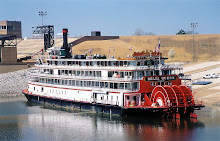
The very first steamboat to travel to New Orleans and return by its own power was the ENTERPRISE, designed and built in the Brownsville boatyards and launched from the Brownsville Wharf in 1814.

"Saint Barbara , the patron saint of miners, was a young virgin who defied her father and decided not to marry. Because of this he kept her in a tower. She ordered some workmen to alter the tower while her father was away, thus becoming the saint of architects. After finding out about this her father chased her to the hills where she was swallowed up by the hill. Her name is attached to Santa Barbara, California. There is a prayer for miners dedicated to Saint Barbara:
"As I now descend into the dark bowels of the earth, I beseech thee, sweet Barbara, that I be kept safe from harm, for it liketh me not that I rush unbidden into God's presence."

Wilson's Port, later called New Geneva was a very early place for freighting flatboats and rafts.The land later was patented by Elias Stone and his wife in 1787 and was called Delight.


Augustine Dillner and his wife were the first settlers in what is now Greene county.They arrived as early as 1754 and in 1755 built a cabin close to Crow's Ferry ( Dillner ). The Indians were friendly with them till Lord Dunmore's war of 1774.


"While making a tour of the United States in 1837, General Santa Anna, President of Mexico, stopped in Washington Pa.on January 15. Following the custom of the time, he probably took breakfast at Hill's Stone Tavern ( now the Century Inn ) in Scenery Hill, Pa. This was only a year after the massacre of the Texans at the battle of the Alamo, and Santa Anna was not very popular, so there was no reception committee. All known of this visit was the mere mention in the local paper, The Examiner of his passing and a well grounded tradition that a local man named Brice, whose brother had drawn a black bean ( died ) at Goliad, lay in wait just west of town to take a pot shot at the self styled "Napoleon of the West" as the stage rolled by. Fortunately for Santa Anna the sheriff heard of the plot, and, probably against his personal inclination, gathered Brice into his official fold until the Mexican was safely through Washington. Incidentally, Brice was a dead shot, and might have saved the United States much trouble nine years later if the sheriff had let him alone."

Hills Tavern now Century Inn


UMWA LOCALS
6330 Chartiers
688 Clyde
4583 Clarksville
6151 Mather
6290 Nemacolin
6310 Greensboro
4731 Crucible

6159 Bobtown
762 Vestaburg
2300 Waynesburg

UMWA Band of 4583 Clarksville Stanley Fowler Collection

One of the most notable early teachers in Fredericktown was Jonathan Knight. He was later one of the most eminent engineers of his day and became Chief Engineer of the Baltimore and Ohio railroad. He was the inventor of the coning of RR car wheels so that cars stationary on their axles can run on curved tracks without spreading the rails. He surveyed a line ( never built) for the B&O through Greene County in 1836. He lived in Centerville Pa.


Augustine Dillner and his wife were the first settlers in what is now Greene county.They arrived as early as 1754 and in 1755 built a cabin close to Crow's Ferry ( Dillner ). The Indians were friendly with them till Lord Dunmore's war of 1774.

In 1826 the Str. REINDEER was the first boat to Morgantown.

"On February 11, 1850, the first steamboat came up the Monongahela River to the little town of Fairmont. This boat was the GLOBE owned by a man named Yeager. Its appearance created a great sensation among the people, for the majority of them had never seen a steamboat, much less had one come up to their very doors. When it became known throughout the country that a steamboat was to come up the Monongahela River at daybreak on February 11, the people for miles around gathered along the banks of the river as early as the afternoon before. When the whistle of the Globe was heard down the river, the courthouse bell was rung for two hours. The people had brought lunches, so they took the day off as a holiday; speeches were made, and the new wonder examined. Many of the citizens had a free ride up the river. That day was long to be remembered." It was two years before another boat arrived.


In 1856 slackwater, meaning locks and dams, were completed up to New Geneva, making navigation possible nearly year round.

Dry Tavern was named so because in early days there was a tavern there with no liquor sold. It was on the main road leading south between Pittsburgh and Virginia. For years it was the busiest north - south road west of the mountains. The road was laid out by John Crawford and went from Pittsburgh to Finleyville, Bentleyville, Beallsville, Millsboro, Charmichaels, Willow Tree, Rosedale to Morgantown. It was planned to be 60 feet wide.

Ruff Creek got it's name from an Indian named Ruff who lived there.

The first telegraph line in Greene county was erected from Rices Landing to Waynesburg in 1861.


Southwest Pennsylvania was claimed by the districts of West Augusta, Virginia and by Westmoreland, Pennsylvania. In 1776 West Augusta became Ohio, Yohogania and Monongalia Counties, in Virginia. . Greene County in 1776 was partly ( the western slope ) in Ohio county Virginia and partly ( the eastern slope ) in Monongalia County Virginia. The court house for Monongalia was near New Geneva Pa. on the farm of Theopolis Phillips. The court house for Ohio county was at West Liberty W. Va. Virginia law directed that at each court house there was to be a pillory, a pair of stocks, a whipping post and a ducking stool ( now called waterboarding ). Only the ducking stool was used for women.
By 1780 Virginia and Pennsylvania settled their boundary dispute placing most of the Yohogania County region in Westmoreland County. In 1781 Washington County was created from Westmoreland County. Greene County was created from Washington County in 1796.


Before the big modern dams you could at times cross the mouth of Ten Mile Creek by skipping from rock to rock. Other times, because of the volume of water coming out of the creek a very large sand bar would build up there and the river channel would have to be dredged for boats to pass.

Besco is named for the Bessemer Coke Company who operated the Champion mine there using all the coal to make coke in it's 100 ovens . By 1914 there were 257 ovens, a sizable operation. The railroad reached Besco around 1911 and that was the end of track until it was extended farther through Clarksville to Mather in 1919.

In Common Pleas Court in 1797, the following case was considered : The Sheriff of Greene County wishes Richard Swan to answer the charge that he bit off a piece of John Moore's ear thereby damaging the peace and dignity of the Commonwealth.

March 30, 2009

UMWA's Mitchell Day In Clarksville 1959


The observance of Mitchell Day every April 1st celebrates the occasion back in 1898 when the United Mine Workers Of America gained the 40 hour week and the 8 hour day which was eventually made the standard for all working people. In most mining towns this meant a large gathering, sometimes with a parade but always with speeches from politicians and labor leaders, food, drinks and a local talent show. This is the program from one such event in Clarksville 50 years ago.


collection of the author


John Mitchell, February 4, 1870–September 9, 1919, was a United States labor leader and president of the United Mine Workers of America from 1898 to 1908. He was born in 1870 in Braidwood, Illinois, a second generation Irish immigrant. He became an orphan when he was only six years old, and began working at that age to support his family. He worked in the coal mines his whole life. When he was nineteen years old, he joined the Knights of Labor in 1885 and was a founding member of the United Mine Workers of America in 1890. He was made an international union organizer in 1897 and worked alongside Mother Jones before being elected an international vice president the same year.
In September 1898, at age 28, Mitchell became acting president of UMWA after president Michael Ratchford resigned to become a member of the United States Industrial Commission.
He served as fourth vice president of the American Federation of Labor (AFL) from 1898 to 1900, and as second vice president from 1900 to 1914 (although he had lost the UMWA presidency in 1908).
Along with AFL Samuel Gompers and AFL secretary-treasurer Frank Morrison, he was sentenced to prison for violating a court injunction during a strike at the Buck Stove and Range Co. in St. Louis, Missouri.
One of Mitchell's earliest challenges in the UMWA was to help incorporate new workers from various ethnicity into the union. There were numerous language barriers, as well as cultural biases and outright prejudice to be overcome. His success in this area helped him become vice-president in 1897, and president one year later.
Labor activity was notoriously dangerous at the time. Just before Mitchell became president, the Lattimer Massacre had seen 19 miners killed by police. This was also a period of growth for the union, the number of members grew almost tenfold, from 34,000 to 300,000, during Mitchell's term. Mitchell engaged in contentious negotiations with mining companies, including one in which President Theodore Roosevelt had to intervene, resulting in an eight-hour workday and a minimum wage. A tributary statue of Mitchell stands on the grounds of the Lackawanna County Courthouse in Scranton, Pennsylvania, the site of the negotiations which President Roosevelt got involved in. Because of the significance of these negotiations, the statue and the Courthouse are considered National Historic Landmarks.
When his successor, Thomas Lewis, won approval of a resolution forcing UMWA members to resign from the National Civic Federation, Mitchell left the union. He continued his association with the federation for many years, as well as serving on a number of state and federal
commissions.
Mitchell died in New York City in 1919. Since then the 1st of April has been a miner's paid holiday.


United Mine Workers of America (UMWA) International President Cecil E. Roberts issued the following statement today:
On January 25, 1890, 119 years ago yesterday, hundreds of incredibly brave coal miners from around the country gathered in Columbus, Oh., and voted to establish the United Mine Workers of America. They were of different racial and ethnic backgrounds and spoke different languages, yet all were united by one common purpose: To throw off the yoke of servitude and oppression that defined life for a coal miner–no matter his race or national origin. The battles that followed over the next 119 years echo through our nation’s history books – the Lattimer Massacre and great anthracite strike in northeastern Pennsylvania, the Ludlow Massacre in Colorado, the battle of Blair Mountain in West Virginia and more. Through it all, the UMWA didn’t just survive, it grew. And every American who is in the workforce today benefits from the fights and struggles of our UMWA forefathers. The eight-hour day, overtime after working 40 hours in a week, the end of child labor, employer-provided health care, pensions, safety and health on the job–all of these things American workers take for granted today were first fought for and won by UMWA members. There are those who believe that things will never go back to the way they used to be; that because of advances in labor laws and 'enlightened' employers, workers no longer have to collectively stand up for themselves and their rights on the job. Nothing could be further from the truth.
Harsh and oppressive employers still exist today in abundance, and not just in the coalfields. One only has to open the newspaper or turn on the news to see stories about employers forcing workers to work off the clock, denying overtime pay, engaging in racial and gender discrimination and ignoring safety and health laws and regulations. The fight for justice on the job is far from over.
One hundred nineteen years after our founding, we are still here and still standing up for working families. After all the battles, strikes and lockouts, we are still here. After losing 100,000 killed in mine disasters and another 100,000 killed by black lung, we are still here. We’ve been shot, maimed, burned, beaten, thrown out of our houses, blacklisted, buried alive–but we’re still here.

March 26, 2009

Clarksville Celebrates 100 Years June 5-7 2009 - Be A Part Of It !


Clarksville around 1962, images from Clarksville Pa.

This blog, while about the Ten Mile Creek area in general, has had a lot on the town of Clarksville, partly to present some new information and photos to go along with the coming 100 year observance this summer. The town officially dates from 1909, that being the year of it's charter. It was 100 years earlier, however , when Samuel Clark founded and laid out the town. So in one sense it's 100 years old and in another sense it's 200.

The residents of Clarksville, Pa. will be celebrating the 100th anniversary of the Greene County community on June 5-7, 2009. Many events are being organized, please join them and help celebrate this special time.

A dedicated and energetic young lady, Randi Ross Marodi, is coordinating most of the efforts including a book and sends out this request to present and former residents:
"When this book is done I don't want it to be a run-of-the-mill history book. I want it to come alive with great stories - memories from people who might have been born in Clarksville, people who played, attended school, hit baseballs, fought fires, fell in love, got married, made friends, rode bikes, jumped trains or went swimming in the creek. You get the picture.I would really like to have each generation of Clarksvillians represented. For example, I would love to have a story from a kid under 10 who currently lives in the borough; someone in their 20s who lived there; 30s; 40s; etc. Do you know someone who would like to participate? If they would, but they don't like to write, just let me know. I can make arrangements to call them and interview them.In addition to a story, I would love to have a photo of the writer, preferably doing something in Clarksville during the time period of their story. This might be asking a lot, but I think a book filled with personal accounts and pictures will be great. Now, if you decide to write a story, here is some information I would like for you to include: Where was the writer born? When did they move to Clarksville? What activities did they participate in? Where did they go to school? Their favorite memory. Their parents names. Who are their siblings? Where are they today and what are they doing? Some of this information might interfere with the flow of the story, so you might just want to include it and we can put it under the photo. Now, please get off the internet, grab a pencil and start writing. And, when you take a break don't forget to go look through your box of old photos. When you are done you can email the story and photos to Randi Ross Marodi at rossmarodi@bentcom.net. Thanks, and remember, the celebration is this June, so don't waste any time."

Vendors are needed for Clarksville's 100th Birthday Celebration. Non-profit organizations can reserve a spot for free. All others will be charged a small rate. The deadline for vendors is June 1st.
Be Part of History, Buy an Ad in Clarksville's 200th Anniversary Book
Get all information at her website Clarksville Pa.
Please bookmark this site or subscribe to the feeds so that you can remain informed of all plans.